When the Screen Becomes Reality
There is something uniquely magical about a Mario character party in Silicon Valley — and it goes beyond the obvious fact that kids here tend to be enthusiastic gamers. It's that the parents are, too. In a region where engineers who worked on game engines attend birthday parties, where children grow up in households with multiple gaming consoles and parents who can debate the merits of every Mario title going back to 1985, the cultural weight of a live Mario character appearance carries particular resonance.
When a child in Cupertino or Mountain View sees Mario walk into their birthday party, something happens that no amount of themed plates or question-block centerpieces can achieve: the world behind the screen steps out. The character they've guided through castles, the voice they've heard triumphantly celebrate every coin, the face they've watched on a screen in the living room — suddenly exists in three dimensions, is looking at them, and knows their name. For a gaming-culture household, that is an extraordinary moment.
This guide focuses on how to design a Mario party in the Bay Area that honors that gaming heritage — using interactive, game-inspired activities that bridge the digital and the physical, and that give Silicon Valley kids (who know their Mario lore) the depth of experience they deserve.
The Silicon Valley Gaming Household
Families in Santa Clara, Palo Alto, and Los Gatos tend to approach birthday parties with the same thoughtfulness they bring to other projects: research, design, a clear success metric. Parents want the party to feel intentional, not random. They want activities that are genuinely engaging, not just filler. And they want their children to come away with a memory that feels earned rather than manufactured.
A Mario character party, done well, delivers on all of these goals — because Mario's world is built on structured play, clear rules, and the particular joy of mastering a challenge. When you translate those qualities into real-world party activities led by a live character, you're offering Silicon Valley kids something they intuitively understand: a well-designed experience with satisfying feedback loops.

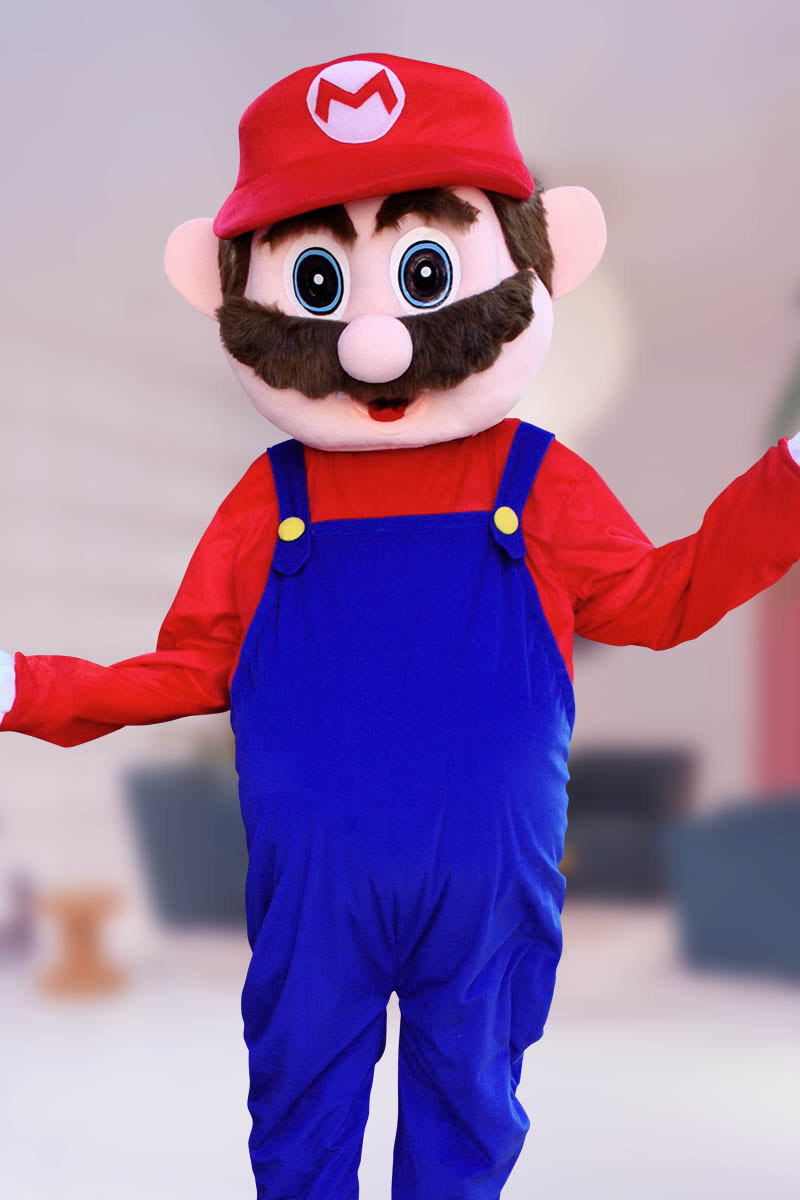
Mario bringing magic to a San Jose birthday celebration
Game-Inspired Activity Ideas for Silicon Valley Parties
The activities that work best for Bay Area Mario parties are ones that feel genuinely game-like: they have clear objectives, trackable progress, escalating challenge levels, and satisfying rewards. Mario character performers are at their most effective when they're running these structured activities — because they bring the game-world authority that makes every challenge feel legitimate.
Structuring Your Party Like a Game World
One particularly popular approach for Bay Area parties is to structure the celebration itself like a Mario game: divide the party into "worlds" or "levels," each with a different activity, and have Mario guide the group through them as their trusted captain.
- World 1 — Coin Collection Race: Kids race through an obstacle course collecting gold coin tokens. Mario tracks the leaderboard on a large display board with each child's name. The course can be as simple as cones, hula hoops, and a fabric "pipe" tunnel in a backyard or living room.
- World 2 — Star Power Trivia: Mario hosts a trivia round about the Mushroom Kingdom. Questions are adapted for different ages — younger kids get easier questions about character names and colors, older kids get deeper game-lore challenges. Each correct answer earns a star sticker on the leaderboard.
- World 3 — Goomba Stomp Arena: A classic balloon-stomp game with a leaderboard twist. Kids earn points based on speed and style, with Mario providing color commentary throughout.
- World 4 — Boss Level Challenge: A final cooperative challenge where all kids work together to achieve a shared goal — stacking foam blocks into a castle, completing a team puzzle, or passing a baton through the whole group without dropping it. Mario celebrates the win as a team achievement rather than a competitive result.
The beauty of this structure is that it creates narrative momentum through the party. Kids aren't just waiting for cake — they're advancing through levels. The birthday child is the designated "Player 1" who leads each challenge, which gives them a clearly defined role and consistent recognition without making other kids feel left out.
Make-and-Take Activity Stations
For Bay Area families who appreciate the maker culture and hands-on learning ethos that permeates Silicon Valley, a build-your-own activity station works beautifully alongside the character entertainment:
- Design Your Own Mario Kart: Pre-cut cardboard box "kart" templates that kids decorate with markers and stickers at a craft station before the character arrives. Mario inspects each kart and awards enthusiastic approval for every one.
- Power-Up Badge Making: A simple badge-making station where kids choose their "power-up" (star, mushroom, fire flower) and create a party badge to wear. Mario certifies each badge during his interaction time, which gives him a natural reason to engage individually with every child.
- Pixel Art Cards: Graph paper and colored pencils for kids to create 8-bit pixel art portraits of their favorite Mario characters. Particularly popular with slightly older kids (seven and up) who enjoy the methodical, grid-based creative challenge.
Age-Calibrating Your Activity Design
For mixed-age parties common in close-knit Silicon Valley neighborhoods, design each activity with two difficulty levels: a "World 1" mode for younger or less experienced kids, and a "World 8" challenge mode for older players. Our Mario performers are skilled at adjusting on the fly, but giving them this framework ahead of time creates a smoother experience for everyone.
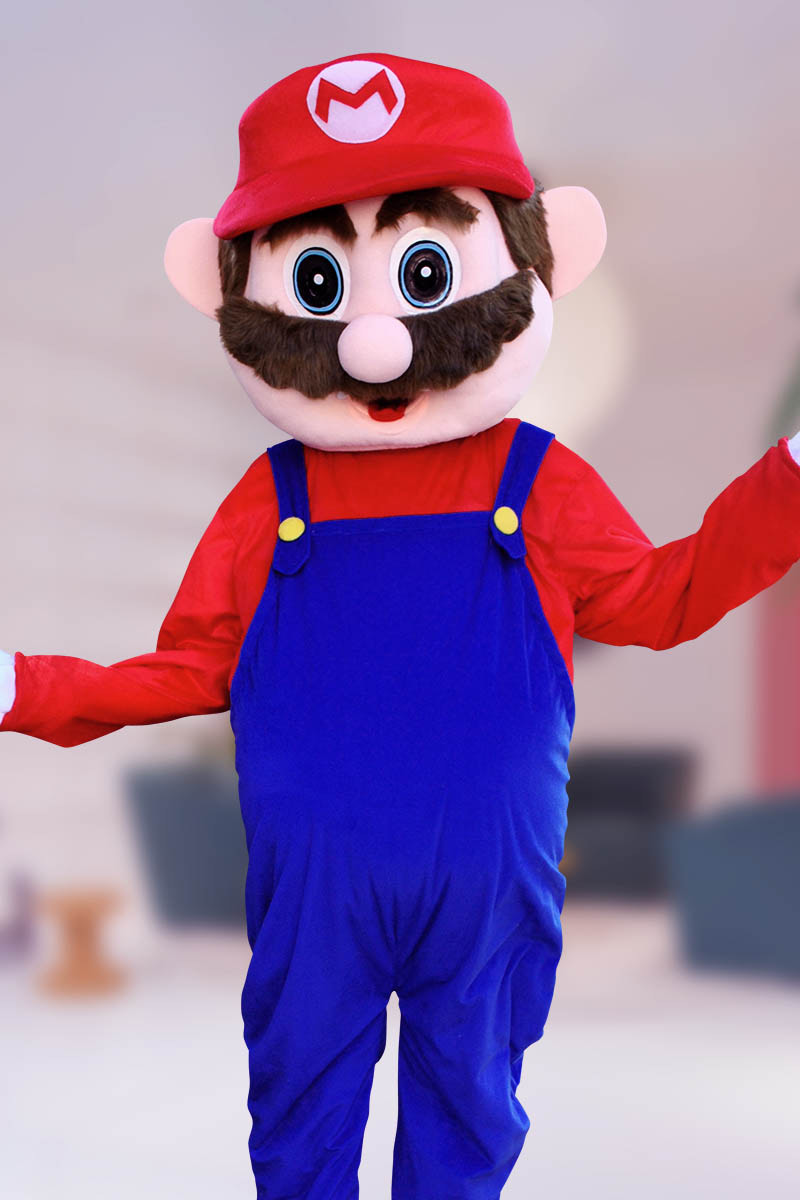
Our professional Mario performer entertaining kids
Setting Up Your Mario Party Space
Bay Area weather is famously mild — Sunnyvale and Los Gatos both enjoy comfortable conditions for most of the year — which means you have real flexibility between indoor and outdoor setups. Each has distinct advantages for a gaming-culture Mario party.
Indoor Party Spaces: The "Gaming Room" Aesthetic
For families in newer developments in Santa Clara or Fremont with open-plan living spaces, an indoor Mario party setup can lean into the gaming aesthetic beautifully. Think screen-time-appropriate references: pixel art banners, controller-shaped decorations, and retro game cartridge-styled name tags. A projected Mario game on a TV in a corner (with sound off during active party time) creates ambient atmosphere without demanding attention away from the live character experience.
Indoor spaces work particularly well for the activity-station approach described above, because kids can cycle through stations without weather considerations and with better visibility for the leaderboard display.
Outdoor Party Spaces: Bay Area Backyards
For families in Los Gatos, Palo Alto, or the hillside neighborhoods of Saratoga, a backyard Mario party takes advantage of the Bay Area's genuinely beautiful outdoor environments. The mild temperatures mean outdoor parties are comfortable from late February through November with minimal planning adjustments.
Outdoor setups for Silicon Valley Mario parties benefit from a clear activity zone with defined boundaries (a temporary fence or rope barrier helps younger kids understand the play area), a shade canopy near the dessert station, and a simple speaker setup for background music. Mario's famous theme song playing softly as kids arrive sets a tone that every person at the party — including the adults — will recognize and respond to with a smile.
A Clean, Intentional Decoration Approach
Silicon Valley families tend to appreciate clean design. A Mario party in Mountain View or Cupertino doesn't need to be maximalist to be great — in fact, a restrained, intentional approach often looks and feels better in the modern homes and carefully designed outdoor spaces typical of the area. Focus on a few high-impact elements: a quality backdrop, a cohesive table setup, and a balloon installation. Let the character performer and the activities carry the experiential weight.
For the tech-parent audience, a simple digital slideshow of classic Mario game artwork cycling on a TV or tablet screen in the background adds a layer of nostalgia and authenticity without requiring any physical decoration investment.

Mario at a party across the South Bay and Silicon Valley
Bring Mario to Your Silicon Valley Party
Our character performers serve families across San Jose, Santa Clara, Sunnyvale, Mountain View, Palo Alto, Cupertino, Fremont, and Los Gatos. Check availability for your date and let's design an experience your Silicon Valley birthday kid will never forget.
Check AvailabilityTips for the Informed Silicon Valley Party Host
Bay Area parents often come to character party bookings with specific, well-researched questions. Here are the answers to the ones we hear most often from families across San Jose, Palo Alto, and the surrounding communities:
- Brief the character on your child's Mario knowledge level. A child who plays Mario Odyssey daily has different expectations than a child who knows the character mainly from the movie. Our performers can calibrate their references and interactions accordingly — all we need is a heads-up when you book.
- Build in transition time between activities. The "level-based" party structure works best with natural reset moments between each challenge. Three to five minutes between activities lets kids decompress, grab water, and be fully ready for the next challenge — which means better engagement and fewer meltdowns.
- Keep the birthday child's role visible but not isolating. "Player 1" status is most effective when it means leading activities rather than performing in front of peers. Mario's interactions with the birthday child should feel special without putting them on a spotlight that makes them uncomfortable.
- Plan for the Grandparent Factor. Bay Area birthday parties often include grandparents visiting from out of state who may not share the birthday child's gaming references. Mario's universal joy and visual recognizability bridges that gap beautifully — but a quick character explanation in the invitation ("We're having a Mario character performer at the party!") helps set expectations for guests who may not know the franchise.
Frequently Asked Questions
My child is a serious Mario gamer. Will the character performer know enough about the game to hold up to scrutiny?
Our performers are thoroughly versed in Mario lore, characters, games, and universe details. They're prepared for sharp young fans and approach deep-knowledge questions with enthusiastic in-character responses that delight rather than deflect.
Can I incorporate the Nintendo Switch games into the party alongside the character experience?
We'd suggest treating the live character experience and the gaming time as separate moments rather than running them simultaneously. The live Mario experience is most powerful when it has full attention — and then gaming time afterward gives kids a fun transition activity.
What's the ideal number of kids for a game-structured Mario party?
The level-based activity structure works best for groups of eight to twenty kids. Smaller groups allow for more individual character interaction; larger groups benefit from more structured team activities where everyone participates simultaneously.
How long should I book the character for?
Most Bay Area families find that a 60-minute character appearance covers a warm arrival, two to three structured activity rounds, individual photo time, and a birthday song moment. For particularly large groups or activity-heavy parties, 90 minutes gives more breathing room.
